


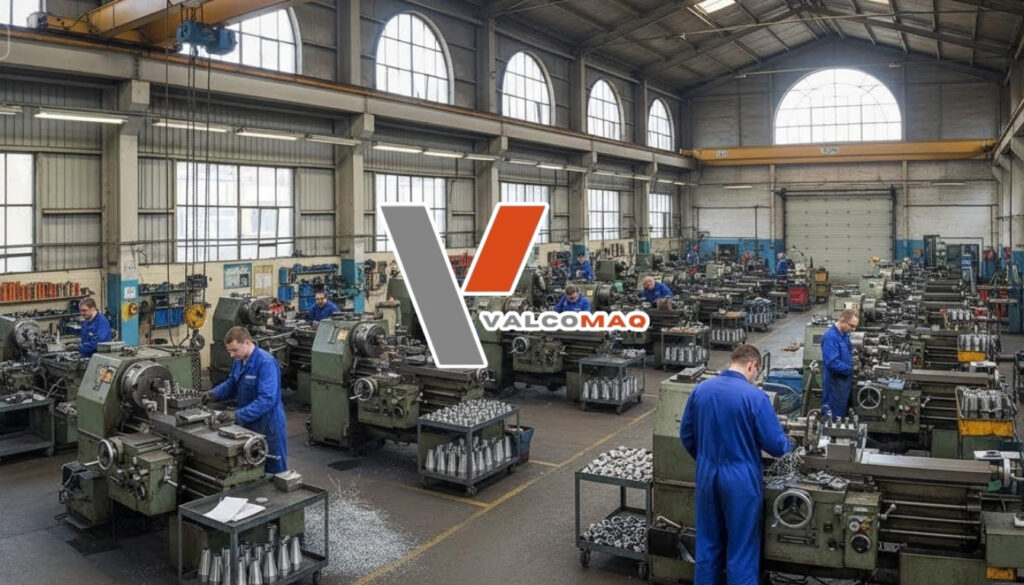
Industrial lathes remain one of the most critical machine tools in any machining workshop. However, choosing the right lathe is not just about brand or size. A poor decision can lead to loss of precision, reduced productivity, or future limitations.
In this article, we explain which technical factors truly matter when selecting an industrial lathe—especially when considering used or refurbished machines, like those we work with at Valcomaq.
1. Distance Between Centers and Swing: More Important Than They Seem
Two of the first specifications most buyers check are:
- Distance between centers
- Swing over bed / cross slide / gap
But numbers alone are not enough.
What you should really consider:
- Distance between centers should cover future jobs, not just current ones.
- Swing over the cross slide is often the real limiting factor in daily work.
- A gap bed is essential if you machine flanges, discs, or short large-diameter parts.
👉 Common mistake: buying a “just enough” lathe that becomes a limitation within months.
2. Spindle Bore: A Hidden Productivity Factor
The spindle bore diameter determines whether bar work can pass through the headstock.
- Small bores require cutting material beforehand.
- Large bores allow faster production, fewer setups, and lower handling time.
In production environments, this single parameter can dramatically affect efficiency.
3. Rigidity and Weight: The Real Foundation of Accuracy
In industrial lathes, mass equals stability.
Key aspects:
- Bed design (single or double prism)
- Bed width
- Total machine weight
A heavy, rigid lathe:
- Vibrates less
- Allows deeper cuts
- Holds tolerances over time
This is why many older, well-built industrial lathes still outperform lighter modern machines.
4. Equipment That Makes a Real Difference Day to Day
A well-equipped lathe does not just cut better—it works better.
Key elements to consider:
- Digital Readout (DRO)
- Quick-change toolpost
- Fixed and/or follow steady rest
- Additional chucks (3-jaw and 4-jaw)
- Safety guards and ergonomics
👉 A “bare” lathe often becomes more expensive after adding accessories later.
5. New vs. Used Industrial Lathes
A high-quality used industrial lathe can be an excellent investment if:
- The brand is proven
- Geometry is checked
- Machine is tested under power
- Documentation is clear
- Technical advice is provided before purchase
In many cases, a properly selected used lathe offers greater rigidity and reliability than a low-end new machine.
Conclusion: Choosing Well Is Investing Smartly
Selecting an industrial lathe is not about comparing datasheets—it’s about understanding what you machine today and what you may machine tomorrow, and choosing a machine that will support your growth.
At Valcomaq, we help you:
- Define real machining needs
- Compare technical options objectively
- Select used industrial lathes with professional criteria
If you are considering adding a lathe to your workshop, talk to us before deciding.