

Purchasing second-hand industrial machinery can be a smart solution for companies looking to optimize their budget without sacrificing quality or functionality. However, it’s important to take several key factors into account to ensure that your investment is profitable and satisfactory. In this guide, we explain everything you need to know to make an informed and effective decision.
- Define Your Needs and Objectives
Before you start searching for machinery, it’s crucial to have clarity about your requirements. Ask yourself:
• What type of machine do you need, and for which specific process?
• How frequently will you use it?
• What technical and functional capacities does your operation require?
Having clear answers will help you focus on equipment that truly adds value to your business. - Research the Seller’s Reputation
Not all second-hand machinery sellers offer the same guarantees. It is essential to investigate and choose reliable suppliers, such as Valcomaq, who:
• Carry out rigorous technical inspections of all machines
• Offer quality guarantees and transparency throughout the purchase process
• Have experience and strong references in the sector
A trustworthy seller is your best ally to ensure you are acquiring equipment in optimal working condition. - Check the Overall Condition of the Machine
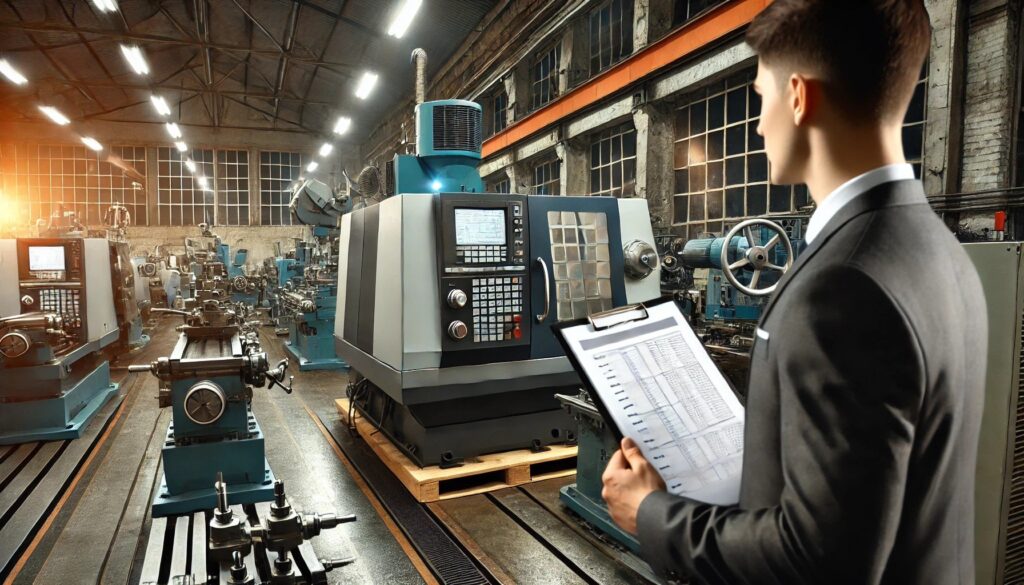
When inspecting used machinery, pay special attention to:
• Mechanical components: Make sure there are no visible damages, excessive wear, or missing parts.
• Electrical system: Verify that circuits and panels are in good condition.
• Operational tests: Whenever possible, request a demonstration to confirm that the machine operates correctly.
At Valcomaq, all our machines undergo thorough inspections before being offered for sale. - Evaluate the Machine’s Usage and Maintenance History
Request detailed information about the machine’s history, including:
• The types of applications it was used for
• The frequency and quality of maintenance performed
• Total operating hours or workload accumulated
This will help you assess its wear level and potential remaining lifespan. - Check Compatibility with Your Operations
Ensure that the machine is compatible with your processes and existing equipment. Verify aspects such as:
• Electrical power and installation requirements
• Additional accessories or tooling it may need
• Its ability to integrate into your current production workflow - Consider the Total Cost of Ownership (TCO)
While the initial price of used machinery can be attractive, it is vital to consider the total cost of ownership, which includes:
• Preventive and corrective maintenance
• Possible upgrades or adaptations
• Transport and installation at your facility
Evaluating these factors will help you avoid unexpected expenses and calculate the real return on investment. - Confirm Spare Parts Availability
It is crucial to ensure that spare parts for the machine are readily available on the market. This will prevent future issues in case repairs or replacements are needed. - Choose Sustainability
Opting for second-hand machinery is not only an economic decision but also a sustainable one. By reusing industrial equipment, you help reduce industrial waste and preserve resources.
Conclusion: Make an Informed Decision
Buying second-hand machinery can be an excellent way to reduce costs, increase production capacity, and maintain a sustainable approach. However, the key lies in carefully evaluating the factors mentioned above to ensure a successful purchase.
At Valcomaq, we offer expert advice and a wide selection of high-quality used industrial machinery. Contact us to find the perfect solution for your industrial needs.