

If you are looking for used Durma shears to expand or renew your sheet metal workshop’s machine fleet, you have come to the right place. Durma is one of the most respected names in industrial sheet metal machinery, with a solid reputation built on heavy-duty frame construction and reliable CNC control systems. In this guide we cover what sets Durma shears apart on the used machinery market, the most common ranges and models found in resale, the critical points to inspect before closing a deal, and which type of workshop benefits most from a second-hand Durma. We will also look at indicative pricing, common buying mistakes and how to extend the service life of this type of equipment.
At Valcomaq we have spent more than 20 years inspecting, reconditioning and commissioning used industrial machinery, and used Durma shears are among the most requested machines by workshops looking for precision and durability without the cost of buying new. Let’s get into the details.
What sets Durma apart in the used hydraulic shear market?
Durma has earned a strong position among sheet metal machinery manufacturers thanks to an especially rigid frame design, engineered to absorb cutting stresses without deformation or vibration that could compromise cut quality. This structural robustness is one of the main reasons why used Durma shears hold their precision even after years of intensive use in metal fabrication, structural steel and boilermaking workshops. The Turkish manufacturer, with a strong presence across Europe, invested early in integrating benchmark CNC controls such as Cybelec, which makes it much easier to program cutting angles, manage motorized back gauges and control variable rake angle on the more advanced hydraulic models.
Another differentiating factor is the installed power of their hydraulic units, which on mid-to-high-end models can exceed 30-45 kW, allowing substantial thicknesses of carbon steel, stainless steel or aluminum to be cut without straining the system. This combination of a sturdy frame, powerful hydraulics and reliable CNC control means a used Durma shear retains strong residual value on the second-hand market, provided it has received proper maintenance throughout its working life.
Which Durma ranges and models are most common on the resale market?
On the used machinery market, three main families of Durma shears tend to appear. The mechanical range (MVS), aimed at simple cuts and moderate thicknesses, is usually found in small workshops that prioritize ease of operation over automation. The standard hydraulic range (HGS) features a digital back gauge and offers greater versatility for short and medium production runs, making it a well-balanced option between price and electronic investment. Finally, the CNC range (VS series) is the most sought-after in the higher-value used segment: it includes Cybelec numerical control (models such as the Cybelec 60 or more recent touchscreen versions), automatic variable rake angle and a motorized back gauge with programmable positioning, enabling work with medium-to-high volume runs and demanding repeatability requirements.
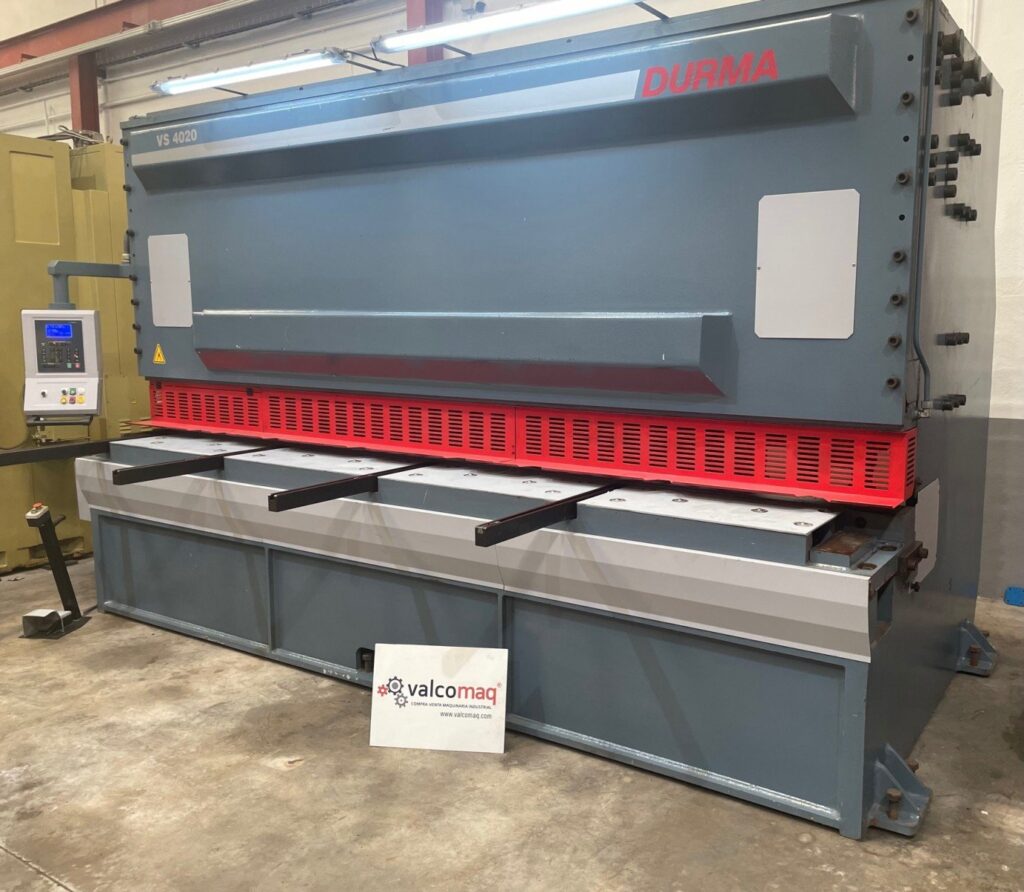
A representative example of this top-tier range is the Durma VS 4020 CNC, capable of cutting sheet metal up to 4080 x 20 mm, fitted with Cybelec CNC, a motorized back gauge and power ratings up to 45 kW – a common model in workshops specializing in cutting and forming heavy-gauge plate. At Valcomaq we carry fully inspected units of this type of shear; you can check current availability in our used Durma shears catalog to confirm real-time stock.
Comparing used Durma ranges and models
| Range / Model | Typical capacity | Control | Recommended workshop profile |
|---|---|---|---|
| MVS (mechanical) | up to 3200 x 6 mm | Manual / mechanical stop | Small workshops, simple occasional cuts |
| HGS (standard hydraulic) | up to 3100 x 10 mm | Hydraulic with digital back gauge | Medium-sized workshops, short-to-medium runs |
| VS CNC (Cybelec series) | up to 4080 x 20 mm | Cybelec CNC, variable rake | Workshops with medium-high volume runs and demanding precision |
| AD-R (heavy industrial) | large thicknesses and lengths | Advanced multi-program CNC | Heavy industry, structural steel and shipbuilding |
What should you check before buying a used Durma shear?
The first critical point is the blades. On a used shear, worn or nicked blades directly affect cut quality and can cause burrs or distortion along the edge of the sheet. It’s worth checking whether the blades are original Durma parts or aftermarket replacements, how many usable sharpening faces remain (typically two to four), and whether there are any microcracks or signs of overheating. A reputable professional seller, as is the case at Valcomaq, inspects and, if necessary, replaces the blades before putting the machine up for sale, avoiding unpleasant surprises for the end customer.
The second point is the motorized back gauge and its positioning system. You should verify that the lead screw or rack has no excessive play, that the motor responds accurately to CNC commands, and that positioning repeatability falls within acceptable tolerances (typically ±0.1 mm on well-maintained machines). Finally, it’s essential to check hydraulic tightness: leaks at cylinders, valves or fittings, the condition of the hydraulic oil and the working pressure of the unit. A shear with leaks might look like a bargain at first glance, but the cost of repairing seals, cylinders or the pump can significantly inflate the initial investment.
How can you tell if the frame is in reliable condition?
The frame is the backbone of the shear, and its condition determines long-term cutting accuracy. It’s advisable to visually inspect structural welds for cracks, check the flatness of the support table and verify there is no deformation from previous overloading, especially if the machine has regularly worked close to its maximum thickness capacity. It’s also worth requesting the maintenance history if available, and asking about the year of manufacture and estimated hours of use, since a well-maintained Durma from the 2000-2010 period can perform as well as or better than a newer unit that has seen less care.
Finally, it’s advisable to request a live cutting test with different thicknesses and materials before finalizing the purchase. This test allows you to check cut quality, hydraulic unit noise level, back gauge stability and CNC control responsiveness firsthand, providing an extra layer of assurance beyond a simple visual inspection.
Which type of workshop benefits most from a used Durma shear?
Boilermaking and structural steel workshops are the main beneficiaries of this type of machine, as they need to cut medium-thickness sheet metal in long lengths with consistent precision to manufacture structures, tanks or welded profiles. Agricultural or industrial machinery manufacturing workshops also find CNC Durma shears to be a versatile solution for short and medium production runs, where back gauge repeatability cuts down setup time. Meanwhile, sheet metal cutting and distribution centers working to order for third parties particularly value the combination of power and numerical control, as it allows them to offer tight tolerances without investing in a brand-new, high-end machine.
Recommended maintenance to extend the machine’s service life
Proper preventive maintenance is the best guarantee that a used Durma shear will keep performing for years. This includes periodic checks of hydraulic oil level and condition, cleaning and lubricating the blade guides, checking the tightness of structural bolts, and calibrating the CNC system at least once a year. It’s also worth inspecting the condition of the hydraulic hoses, since rubber aging is a frequent cause of leaks on machines over 15 years old. A documented maintenance plan not only extends the machine’s working life but also preserves its resale value should the workshop decide to update its machine fleet in the future.
What are the most common mistakes when buying a used shear?
One of the most frequent mistakes is focusing solely on price without considering the total cost of ownership, including potential repairs to blades, hydraulic seals or CNC software updates. Another common error is purchasing a shear without checking electrical compatibility with the workshop’s installation (three-phase supply, contracted power) or without verifying access dimensions for machine delivery logistics. It’s also a common failure not to request a live cutting demonstration, relying solely on photographs or generic technical sheets, which can lead to unpleasant surprises after installation.
How much does a used Durma shear cost in 2026?
Prices for used Durma shears in 2026 vary considerably depending on the range, year of manufacture, overall condition and whether or not CNC control is included. Lower-capacity mechanical ranges tend to fall into more affordable price brackets, while high-end CNC hydraulic models, such as the VS series with Cybelec control and large cutting capacities, represent a bigger investment but deliver a clear return in productivity and precision. At Valcomaq we set the price of each unit after a thorough inspection, so customers pay for a machine that’s ready to work from day one, with blades, hydraulic system and CNC control fully verified.
How to choose the right Durma shear for your workshop
Choose an MVS mechanical range if: your workshop performs occasional cuts of moderate thicknesses, doesn’t require advanced automation, and you’re looking for a lower upfront investment with simple maintenance.
Choose an HGS hydraulic range if: you need more versatility than a mechanical shear, work with short-to-medium production runs, and value a digital back gauge that speeds up size changes without the investment of a full CNC system.
Choose a VS series CNC range if: your production demands repeatability, you work with medium-to-high volume runs, need to program variable rake angles, and prioritize precision and fast reference changes over initial cost.
Choose an AD-R heavy industrial range if: your operations focus on large-thickness structures, shipbuilding or heavy construction, and you need a machine capable of continuous operation with large lengths and thicknesses without losing precision.
Used Durma shears in the Valcomaq catalog
At Valcomaq we inspect every Durma shear that enters our workshop before offering it to customers: we check the blades, motorized back gauge, hydraulic tightness and proper functioning of the CNC control, so the machine arrives at your facility ready to produce from the very first cut. If you’re considering buying or selling this type of equipment, you can check current stock of used Durma shears available in our catalog, with fully inspected and ready-to-work units. Our team, with over 20 years of experience, will advise you based on your workshop’s real needs, not just a spec sheet.
If you’re looking to expand your machine fleet with full guarantees, feel free to browse Valcomaq’s catalog of used Durma shears and contact us with any technical questions, to request a cutting demonstration, or to receive personalized advice on which range best suits your production.