

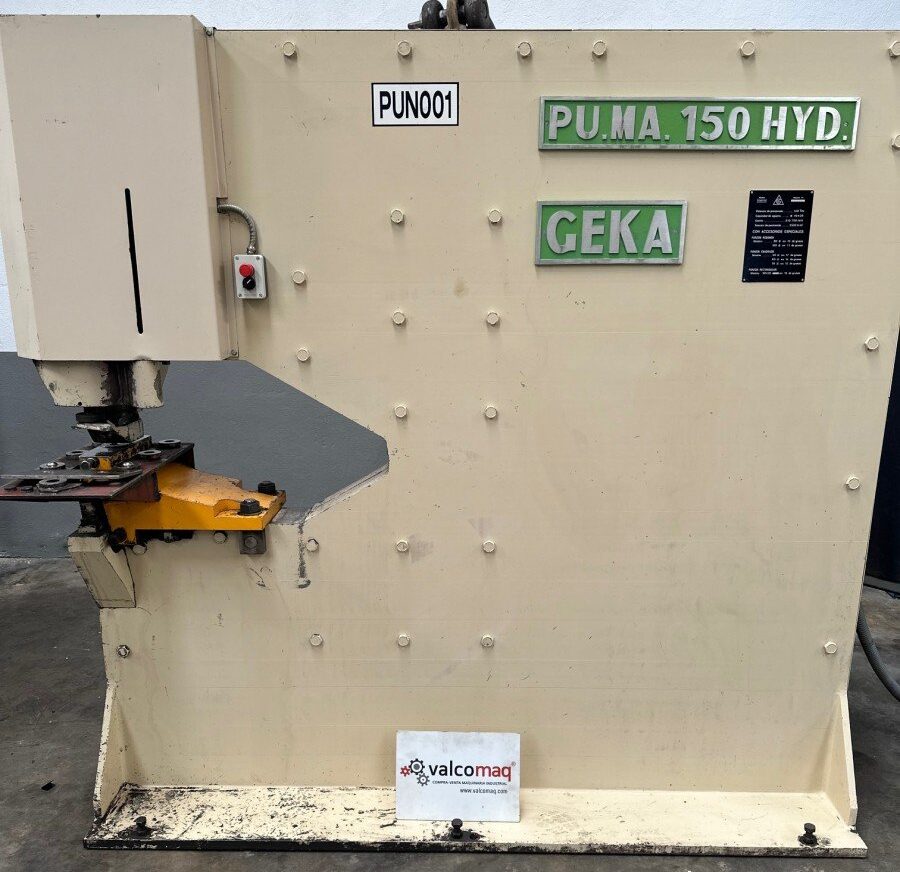
If you are looking to expand your workshop’s punching and cutting capacity without blowing the budget, used Geka punching machines are one of the most popular options among sheet metal workshops, structural steel fabricators and industrial locksmiths. Geka is a leading European brand in combined punching and cutting equipment, known for building rugged machines that keep delivering accurate results for decades. In this guide we explain what sets Geka apart from other brands, which ranges and models show up most often on the used market, the critical points to inspect before buying, and which workshop profile benefits most from this investment in 2026. If you run a metal fabrication shop and care about the balance between investment and productivity, this guide will help you make an informed decision before your next machine purchase.
Throughout the article we also cover indicative prices, common mistakes when buying used machine tools, the maintenance this type of equipment requires, and answers to the most frequent questions from buyers considering a second-hand combined punching machine. By the end you should know exactly which model fits your production and what to check before signing the purchase.
What sets Geka apart in the industrial punching machine market?
Geka is an Italian brand with a long track record in manufacturing cutting and punching machines for structural steel, plate and flat bar. Its main hallmark is extremely rigid frame construction, built in high-quality cast iron, which absorbs the vibrations generated during the punching cycle and extends the service life of the mechanical and hydraulic components. Unlike other brands focused purely on punching, Geka popularised the concept of the combination machine: a single bed capable of punching, shearing flat bar, cutting angle, round and square profiles, and even notching, all with quick tool changes. This versatility reduces the need to keep several standalone machines on the shop floor.
Another aspect that sets Geka apart is the reliability of its hydraulic system, designed to run at high pressures continuously without overheating. This translates into faster work cycles and less wear on seals and valves, which matters a lot to anyone buying a second-hand unit with plenty of hours on the clock. Original spare parts and compatible components also remain widely available even on machines over 20 years old, making Geka a safe bet for buyers looking for durable machinery with accessible maintenance.
Which Geka ranges and models are most common on the used market?
On the used market you will mainly find three Geka families. The Hydracrop range covers the best-selling combination punch-shear machines, with capacities from 60 to 170 tonnes of punching force, designed for workshops handling profiles up to 200 mm and medium-thickness sheet. The Hydracrop Combi range adds angle, round bar and flat bar cutting stations on the same bed, and is very popular with metal joinery and light structural fabricators. Finally, the Hydrapuncher family is geared towards high-output pure punching, with larger-capacity turrets and more sophisticated positioning systems, typically found in workshops running medium to large batch sizes.
Within these ranges, the models most commonly found on the second-hand market are the Hydracrop 80, the Hydracrop 110 and the Hydracrop 128, all with punching forces between 80 and 128 tonnes, more than enough for most locksmithing and medium sheet metal applications. It is also common to find units retrofitted with CNC to automate positioning on long profiles, significantly boosting productivity on repetitive runs. At Valcomaq we regularly work with several of these references and keep multiple units in stock within our catalogue of reconditioned, ready-to-work used Geka punching machines.
Technical specifications that make the difference
When comparing machines, several technical parameters determine whether a Geka punching machine fits your production. Punching force, measured in tonnes, defines the maximum sheet thickness that can be pierced for a given punch diameter; an 80-tonne machine comfortably handles sheet up to 10-12 mm with medium-diameter punches, while 128-tonne models allow for greater thicknesses or larger diameters. Profile cutting capacity, expressed in flange and thickness millimetres, indicates which angle, channel or square tube profiles the integrated shear can cut without straining the hydraulic system.
Another key factor is the throat depth of the machine, i.e. the distance between the punch and the frame, which determines how far into a large sheet you can punch before the material hits the structure. Mid-range Geka machines usually offer throat depths of 300 to 500 mm, enough for most industrial sheet metal applications. It is also worth checking hydraulic motor power, typically between 7.5 and 15 kW depending on the model, and whether the machine has a multi-tool turret, which allows several punches to be mounted at once and speeds up format changes without long downtimes.
What to check before buying a used Geka punching machine
Before closing the purchase of any used Geka punching machine, it is essential to inspect the hydraulic system: check for leaks in cylinders, hoses or valves, and verify that the pump holds the manufacturer-specified working pressure without dropping under continuous load. You should also inspect the condition of the included punches and dies, since their wear directly affects cut quality and can add replacement costs if they are not in good shape. The bed and cast frame should be free of visible cracks, especially around the junction between the main body and the throat, a point subject to repeated heavy stress.
It is equally important to check the electrical cabinet and controls: on machines over 15 or 20 years old, inspect the wiring and contactors, and if the machine has CNC, make sure the software and positioning axes respond correctly. It is also worth requesting a maintenance history if available, and asking for a demonstration both idle and under load before closing the deal. Buying through a specialist supplier that reconditions the machinery, as Valcomaq does, greatly reduces the risk of acquiring a unit with hidden problems, since every machine goes through a full mechanical and hydraulic inspection before being offered for sale.
Comparison of the most common used Geka models
| Model | Punching force | Profile cutting capacity | Recommended workshop profile |
|---|---|---|---|
| Hydracrop 80 | 80 tonnes | Up to 150 mm flange | Locksmithing and small-to-medium workshops |
| Hydracrop 110 | 110 tonnes | Up to 180 mm flange | Medium boilermaking, structures |
| Hydracrop 128 | 128 tonnes | Up to 200 mm flange | Heavy structural fabrication |
| Hydracrop Combi | 80-128 tonnes | Angle, round bar and flat bar | Metal joinery and mixed production runs |
| Hydrapuncher | High punching capacity | Not applicable (pure punching) | Medium-to-high volume production |
What are the most common mistakes when buying used punching machinery?
One of the most frequent mistakes is focusing solely on price without considering the real cost of getting the machine running: a cheap unit with a worn hydraulic system or damaged punches can end up costing more than a slightly more expensive unit that has been properly reconditioned. Another common mistake is failing to check tool compatibility (punches and dies) with the machine’s turret, since not all systems are interchangeable between brands or even between generations from the same manufacturer, which can force you to buy a complete new tool set.
Transport and installation are also often underestimated: mid-range Geka punching machines weigh between 2,000 and 6,000 kg depending on the model, so they require a crane, reinforced flooring and a three-phase electrical connection suited to the motor power. Finally, many buyers skip a real load test before paying, settling for a visual inspection that will not reveal problems in the hydraulic pump or positioning accuracy. Avoiding these mistakes is just as important as choosing the right model.
What maintenance does a Geka punching machine need to last decades?
Maintaining a Geka punching machine is relatively simple compared with other precision machining equipment, but it requires consistency. The most critical point is the periodic hydraulic oil change and filter replacement, since contaminated oil accelerates wear on the pump and proportional valves. It is recommended to check oil level and condition every 500-800 working hours, and carry out a full change at least once a year in workshops with intensive use. It is also important to grease the turret guides and check punch tightness before every format change to prevent fatigue failures.
Beyond hydraulic maintenance, it is worth periodically inspecting the dies, sharpening or replacing punches once cutting starts producing excessive burrs, and checking the electrical cabinet annually to catch any faults in limit switches or safety automation. With proper maintenance, a well-cared-for Geka punching machine can easily exceed 30,000-40,000 working hours without major repairs, which explains why there is still strong demand for units 15 or 20 years old on the used market.
How much does a used Geka punching machine cost in 2026?
The price of a second-hand Geka punching machine depends on several factors: the model, age, overall condition, whether it includes a multi-tool turret or CNC, and the condition of the included punch and die set. As a rough reference, a reconditioned entry-level model such as the Hydracrop 80 typically falls in the 8,000 to 15,000 euro range, while higher-capacity models such as the Hydracrop 128 or Combi versions with more cutting stations can exceed 20,000-30,000 euros depending on equipment and condition. Units fitted with added CNC or with very low hours sit at the top end of the range.
Compared with the price of an equivalent new machine, which can double or triple these figures, buying a reconditioned used Geka represents very significant savings without sacrificing reliability, provided the purchase is made through a supplier that guarantees proper commissioning beforehand. At Valcomaq we price each unit according to its actual condition after mechanical and hydraulic inspection, so the buyer knows exactly what they are paying for and what guarantees come with it.
Which type of workshop benefits most from a Geka punching machine?
Choose a Hydracrop 80 if: you run a locksmithing or light boilermaking workshop with variable production, need a versatile machine for punching and cutting medium-sized profiles, and your priority is a reliable unit with low acquisition cost and simple maintenance.
Choose a Hydracrop 110 or 128 if: your production includes larger structural steelwork, you regularly work with wide-flange profiles or thicker sheet, and you need extra capacity headroom to avoid falling short as order volumes grow.
Choose a Hydracrop Combi range if: your workshop manufactures metal joinery, railings, light structures or runs with a wide variety of different profiles, since the ability to cut angle, round bar and flat bar on the same bed cuts down dead time between machines.
Choose a Hydrapuncher if: your business focuses on sheet punching in medium-to-high volumes, you prioritise cycle speed and repeatability over profile-cutting versatility, and you can benefit from a more sophisticated positioning system.
Used Geka punching machines at Valcomaq: full inspection and warranty
At Valcomaq we have specialised for over 20 years in buying, reconditioning and selling used industrial machinery, and Geka punching machines are a regular part of our catalogue thanks to the constant demand they generate among metal workshops across Spain and beyond. Every unit that passes through our facilities undergoes a full mechanical and hydraulic inspection, replacement of worn components when necessary, and a load test before heading to the customer’s workshop. This lets us offer machinery that is genuinely ready to work from day one, backed by a team that knows the particularities of every model and range in depth.
You can check our updated catalogue of used Geka punching machines, where you will find several available units with detailed technical sheets, condition reports and warranty terms. If you would rather explore other brands or capacities within the same machine family, you can also browse the full category of used metal punching machines and compare options based on your workshop’s specific needs.
If you are considering adding a Geka punching machine to your production line, the best next step is to check current stock and resolve any technical questions with people who know each machine inside out. Visit our catalogue of used Geka punching machines to see available stock, and if you are unsure which model best fits your workload, contact us: we will advise you with no obligation so you can choose the right machine at the best price.