

Buying a used slotting machine requires a clear understanding of what you are actually acquiring, and when it comes to the Colomer brand, that requirement becomes even more relevant given the technical reputation this Spanish manufacturer has built over decades in the metalworking sector. In this guide we look at what sets used Colomer slotting machines apart from other brands found on the second-hand market, which models are most common, which technical points should be checked before closing the deal —stroke length, precision and guideway wear among others— and which type of workshop gets the most value from this kind of investment. We will also cover indicative 2026 pricing, common mistakes buyers make and the most frequent questions from companies considering adding a used Colomer slotting machine to their equipment fleet.
By the end of this article you should have clear, objective criteria to decide whether a used Colomer slotting machine fits your production needs, your budget and the tolerances your parts require, avoiding unpleasant surprises once the machine is already installed on your shop floor.
What sets Colomer slotting machines apart from other brands on the used market?
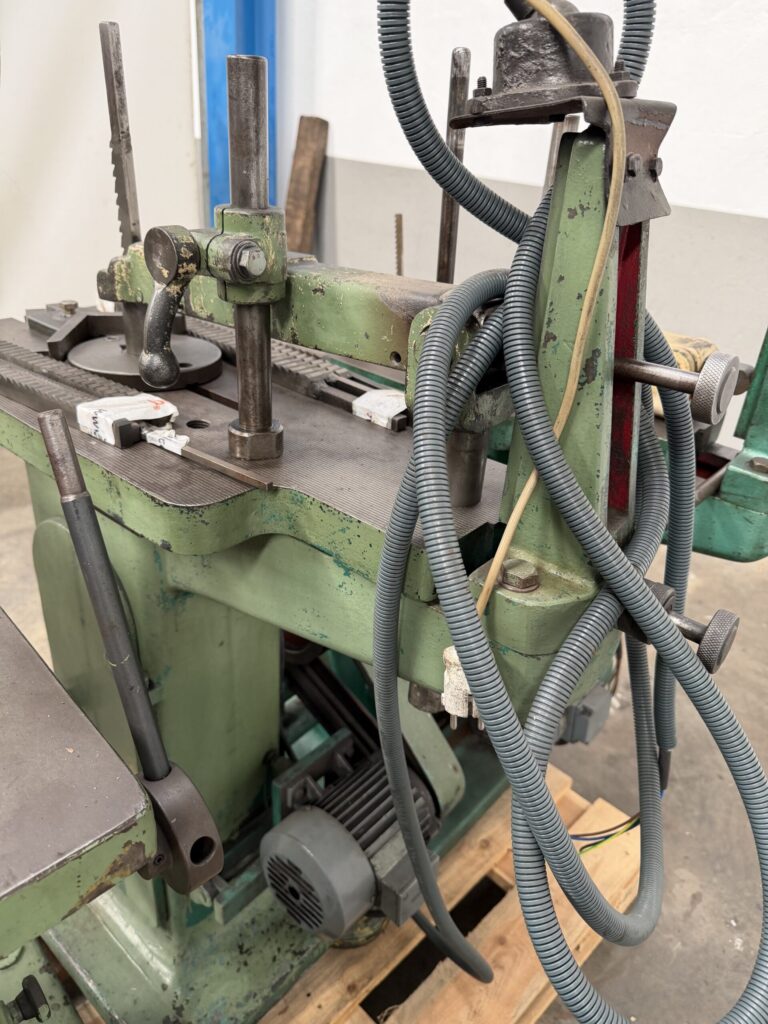
Colomer is one of the historic names in Spanish conventional machine tool manufacturing, specialising in vertical slotting machines built on a heavy-duty bed designed for keyway cutting, internal grooves, straight profiles and machining operations that rely on a highly rigid reciprocating ram motion. Compared with other brands commonly found on the used market such as Sunmaster, Cincinnati or various less widespread Italian models, Colomer slotting machines stand out for their thick cast-iron construction, long-travel ground guideways and cross-feed and rotary table systems designed to last for decades with reasonable maintenance.
Another differentiating factor is the availability of spare parts and the technical know-how built up by Spanish workshops that have been repairing and overhauling these machines since the 1970s and 1980s. This means that a well-maintained used Colomer slotting machine can still deliver machining accuracy below 0.03-0.05 mm on many of its mid-size models, something highly valued by workshops manufacturing tooling, moulds or spare parts, where investing in a brand-new CNC machine is not always cost-effective.
Which Colomer models are most common on the used market?
On the Spanish used equipment market it is common to find mid-range Colomer slotting machines with ram strokes ranging from 450 mm to 800 mm, depending on the manufacturing year and specific series. Models with a 450-500 mm stroke are typically aimed at general machining and tooling workshops, while versions with a 650-800 mm stroke are intended for larger parts such as pump housings, sleeves or heavy machinery components. Units fitted with a large-diameter rotary table are also available, and are particularly appreciated by workshops working with short runs of circular parts requiring internal grooving.
The average age of available units usually falls between 20 and 45 years, which should not be a concern: a slotting machine is a mechanically simple piece of equipment with no complex electronics to become obsolete, so its real service life can extend far beyond that of other equipment if it has been properly maintained. At Valcomaq we inspect every unit before putting it up for sale, checking the condition of the guideways, ram clearance and the operation of the automatic feed system, so the machine reaches the buyer ready to produce from day one.
What should you check before buying a used Colomer slotting machine?
The first thing to check is the effective ram stroke: you need to verify that the travel shown on the nameplate matches the actual available travel, since on heavily used machines the maximum stroke is often limited to protect the most worn guideways. It is also worth measuring repeatability accuracy by machining a test part and checking the flatness and parallelism achieved, comparing the results against the tolerances your usual production requires.
The second critical point is guideway wear, both on the vertical ram guides and on the cross and longitudinal table slides. Excessive wear translates into play that generates vibration, poor surface finish and loss of angular accuracy during machining. It is also advisable to check the condition of the automatic feed mechanism (rack-and-pinion or eccentric, depending on the model), the table screw, the bed for cracks or previous welds, and the electrical system of the motor and control panel, especially on units built before the 1990s, where an upgrade of electrical components may be required for safety reasons.
How do Colomer slotting machines compare to other brands on the market?
To make an informed decision it helps to objectively compare the most relevant features of Colomer slotting machines against other brands commonly found on the Spanish used industrial machinery market. The table below summarises the aspects that most influence the buying decision.
| Criterion | Colomer slotting machines | Alternative brands (Sunmaster, Cincinnati) |
|---|---|---|
| Bed rigidity | Very high, thick ribbed cast iron | High, varies by manufacturer and year |
| Spare parts availability in Spain | Good, domestic manufacturing | Limited on imported models |
| Typical stroke | 450 to 800 mm | 300 to 900 mm depending on model |
| Typical accuracy after overhaul | 0.03-0.05 mm | 0.04-0.08 mm |
| Ease of maintenance | High, simple and well-known mechanics | Medium, depends on manufacturer origin |
| Used market price | Competitive relative to durability | Variable, sometimes higher on imported units |
What type of workshop suits a Colomer slotting machine best?
Colomer slotting machines are particularly well suited to general machining workshops, tooling and die manufacturers, and industrial repair shops where internal grooving of parts —such as keyways in pulleys, gears or bushings— is a regular part of daily work. They are also highly valued by industrial maintenance workshops and machinery repair companies, which need to solve one-off machining jobs without relying on outsourcing, reducing lead times and costs.
Their versatility also makes them appealing to technical training centres, where the mechanical simplicity of a conventional slotting machine allows the fundamentals of metal cutting to be taught without the added complexity of a CNC machine. On the other hand, for high-volume serial production with very tight tolerances and full automation requirements, it is probably better to complement the slotting machine with more specialised equipment, since by nature it is a machine suited to one-off jobs and short-to-medium production runs.
Industry applications of used Colomer slotting machines
In the automotive and spare-parts sector, Colomer slotting machines are used to cut keyways on shafts, hubs and transmission components that are not always available on the open market and require made-to-order manufacturing. In the agricultural and industrial sector, they are useful for repairing and adapting agricultural or civil-works machinery parts, where component wear frequently requires custom-machined grooves and profiles.
They also have a solid niche in mould and die manufacturing, where slotting allows precise internal grooves to be produced without resorting to wire EDM, reducing time and cost on simple-geometry parts. Finally, in shipyards and port maintenance workshops, longer-stroke Colomer slotting machines are used to machine large components that do not fit on conventional lathes or milling machines, taking advantage of their ability to work elongated parts with consistent accuracy along the entire stroke.
How to maintain a Colomer slotting machine to extend its service life?
Maintaining a used Colomer slotting machine is relatively simple compared with CNC equipment, but it requires consistency. Regular lubrication of guideways, screws and feed mechanisms is the single most important point: insufficient greasing accelerates guideway wear and creates play that is costly to correct later. It is recommended to check the level and quality of the bed oil every few weeks of intensive use, as well as cleaning accumulated chips from the sliding surfaces after every shift.
It is also worth carrying out periodic checks of parallelism and perpendicularity between the ram and the table, adjusting the wear-compensation gibs when the manufacturer includes them, as is the case on several Colomer models. A well-planned preventive maintenance programme, combined with the inspections Valcomaq carries out before sale, allows a used Colomer slotting machine to keep running reliably for many more years, protecting the buyer’s initial investment.
What are the most common mistakes when buying a used slotting machine?
One of the most frequent mistakes is focusing solely on the purchase price without factoring in the cost of a potential overhaul, which may include guideway regrinding, bearing replacement or an electrical panel upgrade. Buying a cheap machine with advanced wear can end up costing more than purchasing a unit already inspected by a specialised supplier such as Valcomaq, where the price includes the guarantee that the machine is ready to work.
Another common mistake is not checking spare parts availability before buying, which is especially relevant for lesser-known brands or discontinued foreign manufacturers. It is also a frequent error not to request a real machining test before closing the deal, relying solely on photographs or the seller’s word. Finally, many buyers underestimate the weight and foundation requirements of these machines, which on longer-stroke models can exceed two tonnes, making it necessary to plan transport and installation in advance.
How much does a used Colomer slotting machine cost in 2026?
The price of a used Colomer slotting machine in 2026 depends mainly on stroke length, condition, age and whether the machine has been inspected by a professional supplier. As a general reference, short-stroke models (450-500 mm) in good condition tend to sit within moderate ranges for used conventional machinery, while longer-stroke models (650-800 mm) or units with a large-diameter rotary table reach higher values due to their capacity and lower availability on the market.
It is important to understand that the price of a machine inspected by a specialist, with a warranty and the assurance that it has been tested in operation, is not directly comparable to a machine sold «as is» by a private seller or during a workshop liquidation. The price difference is usually more than offset by avoiding hidden repair costs and unplanned downtime once the machine is installed and producing.
Frequently asked questions about used Colomer slotting machines
Is this still relevant technology in 2026? Yes, for internal grooving and short production runs, conventional slotting remains a fast and cost-effective solution compared with alternatives such as wire EDM, especially when the part geometry is simple. Do operators need specific training? The learning curve is shorter than for a CNC machine, although experience is still needed in setting cutting speed and feed parameters to avoid vibration and premature tool wear.
Is it easy to find spare parts? Generally yes, thanks to Colomer’s long track record on the Spanish market and the fact that many of its mechanical components are standardised or can be reproduced by conventional machining workshops. Is it worth buying a very old unit? It depends more on the condition of the machine than its manufacturing date: a well-maintained 1980s Colomer slotting machine can outperform a more recent unit that has seen intensive use without proper maintenance.
Which buyer profile fits each option best?
Choose a short-stroke Colomer slotting machine if: your workshop mainly handles general machining, repair of small and medium parts, and tooling manufacturing where floor space is limited and you do not need to work long parts.
Choose a long-stroke Colomer slotting machine if: your activity includes heavy, agricultural or naval machinery components, and you need to cut grooves or profiles in elongated parts that do not fit shorter-travel equipment.
Choose a model with a rotary table if: you regularly work with circular parts that require internal grooving distributed across several angular positions, since this type of table speeds up the process significantly compared with constant manual repositioning.
Choose a unit already inspected by a specialist if: you do not have in-house technical staff to diagnose the real condition of guideways and mechanisms, and you prefer to minimise the risk of unplanned downtime after purchase.
Valcomaq, your trusted supplier of used Colomer slotting machines
At Valcomaq we have spent more than 20 years specialising in the purchase, reconditioning and sale of used industrial machinery, and Colomer slotting machines are a regular part of our catalogue thanks to steady demand from machining, tooling and industrial maintenance workshops looking for a reliable, cost-effective alternative to new equipment. Every unit goes through an inspection process that includes checking the guideways, machining accuracy and the condition of the electrical system, so it reaches your workshop ready to produce from day one, backed by the guarantee of a specialised supplier with presence in both the domestic and international markets.
If you are considering adding a slotting machine to your production, we invite you to check out the used Colomer slotting machines available in our catalogue, where you will find several inspected units ready to work. Our team can advise you based on the stroke, accuracy and budget you need, and we also handle the purchase of your used machinery if you are thinking of renewing your equipment fleet. Check current stock and contact us to resolve any technical question before making your decision.